
Larimer County Probate Division
Probate in Larimer County is a District Court subject matter within the 8th Judicial District. The Probate Division of District Court handles decedent estates, wills, informal probate, formal probate, personal representative appointments, guardianships, conservatorships, trusts, protected-person matters, and minor estates. The Clerk of Court is the records channel for probate files at the Larimer County Justice Center, while the county Clerk and Recorder is the office for recorded instruments and marriage licenses.
That split is important when a probate issue touches real estate or recorded documents. The court probate file may contain petitions, orders, letters, inventories, accountings, and closing documents. A deed, lien, or recorded instrument connected to the estate may appear in the Larimer Official Records Search instead. A complete estate review may require both court records and recorded-document records.
Guardianship and conservatorship records need extra care because they can involve protected-person finances, medical facts, and capacity findings. A public docket may confirm that a case exists while limiting access to reports, evaluations, accountings, and identifying information. The Clerk of Court may ask for identification or court authority before releasing those documents.
The Colorado Judicial Branch small-estate affidavit source is the main court source for this probate records topic.
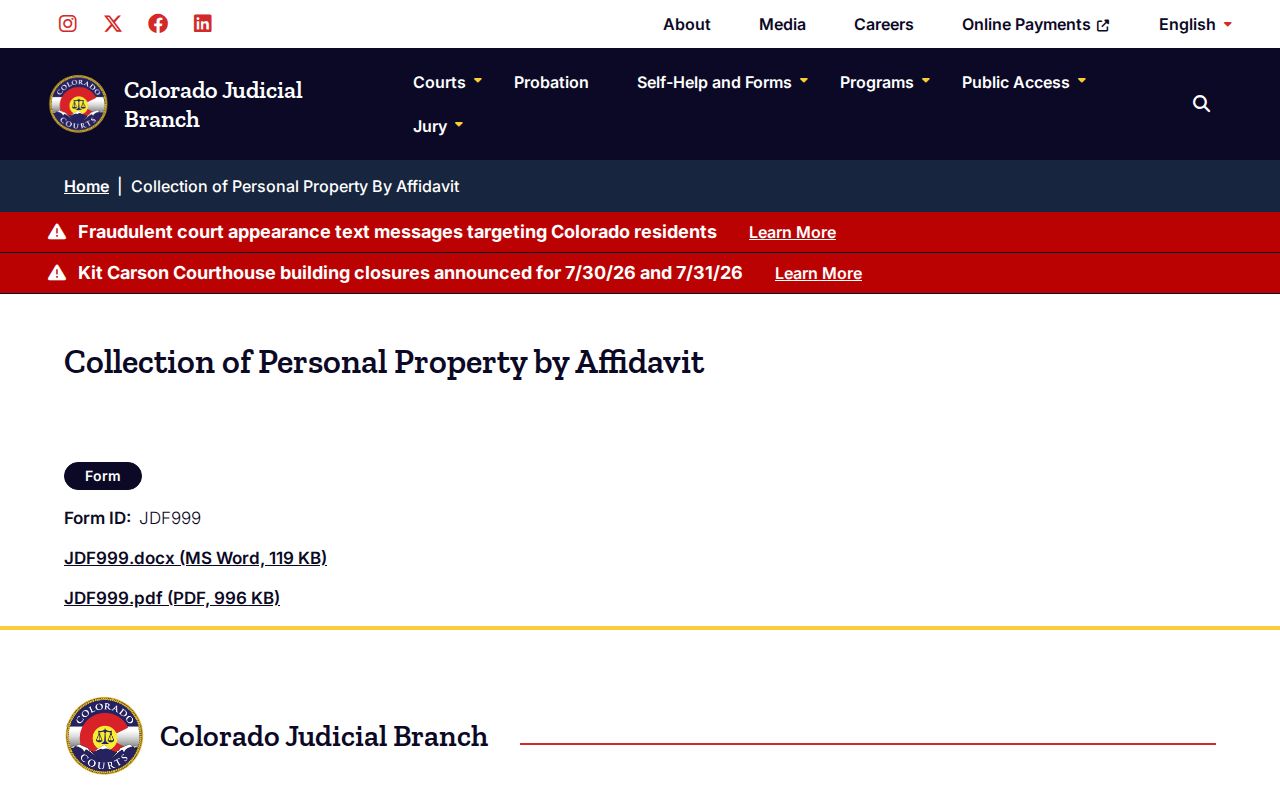
That court form source is central when a Larimer estate may qualify for collection by affidavit instead of a full probate case.
Larimer County Probate Terms
Probate filings use terms that do not appear in most civil case files. These terms help identify who died, who may act for the estate, and whether the court is overseeing an adult, minor, or protected person. A short definition check can prevent a request for the wrong document.
- Testator
- The person who made a will.
- Executor
- A common term for the person named to carry out a will; Colorado forms often use personal representative.
- Intestate
- Dying without a valid will, so property passes under state succession rules.
- Guardianship
- A court case about personal care and decision-making for a minor or incapacitated person.
- Conservatorship
- A court case about managing money or property for a protected person.
- Letters
- Court-issued proof that a personal representative, guardian, or conservator has authority.
Search Larimer County Probate Records
Probate docket dates can be checked through the Colorado Judicial Branch Docket Search when a hearing date or case number is known. For probate document copies, use the Colorado court Record/Document Request Form or email the Larimer records address. The Judicial Branch request form warns that probate records and documents with confidential or protected information may require U.S. government-issued photo ID or further court authority.
Searchers should use the decedent or protected person's full legal name, case number if known, document names, and requester's contact details. Probate case numbers commonly use PR or similar case-type codes. If the request involves a guardianship, conservatorship, protected person, minor, or medical information, expect the public copy to be limited.
- Identify whether the matter is an estate, will, guardianship, conservatorship, trust, or protected-person case.
- Search the docket if a hearing date, case number, or party name is known.
- Request copies through the Clerk of Court using the record request form or records email.
- Specify the exact document, such as will, application, letters, inventory, order, accounting, or closing statement.
- Provide identification or proof of authority when the court requires it for restricted probate material.
Note: Online docket data is not the same as a certified copy of letters, an order, or the full estate file.
Larimer County Probate Request Fields
The court record request form should be filled with enough detail for the clerk to identify the case without exposing protected facts in a vague request. Case number is best. When the case number is not known, use the decedent or protected person's full name and any date of death, party role, or document title available from the family or prior court papers.
| Field Label | Type | Required | Notes |
|---|---|---|---|
| County / court | Dropdown or text | Required | Use Larimer County / 8th Judicial District. |
| Case number | Text | Recommended | Probate cases commonly use PR or similar type codes. |
| Decedent or protected person name | Text | Required if no case number | Use full legal name and date of death for estate files when known. |
| Document requested | Text | Required | Will, application, letters, order, inventory, accounting, decree, or guardianship/conservatorship order. |
| Requester identity | Text / ID | Conditional | ID may be required for restricted probate or protected records. |
| Certification | Checkbox | Optional | Certified letters or certified copies may require a fee. |
Larimer County Probate Contacts
Larimer County has a Probate Division of District Court, not a separate elected probate court. The practical contact point is the Clerk of Court at the Fort Collins Justice Center for District Court probate files. The Loveland County Court location is a state court service point for Loveland dockets and county court services, but probate records are District Court records.
Probate Division of District Court
Larimer County Justice Center
201 LaPorte Ave., Suite 100
Fort Collins, CO 80521
970-494-3500
Records: 08RecordRequest@judicial.state.co.us
Monday-Friday, 7:30 a.m.-4:30 p.m.
Court Resource Center
Larimer County Justice Center
201 LaPorte Ave.
Fort Collins, CO 80521
970-494-3581
08CourtResourceCenter@judicial.state.co.us
Mon/Wed/Fri 8:00 a.m.-4:00 p.m.; Tue/Thu 8:00 a.m.-2:00 p.m.
Larimer County Probate Fees
Local Larimer probate filing fees were not located in the reviewed official research pages. Filing costs, certified-copy costs, letters, and guardianship or conservatorship fees should be confirmed with the Larimer Clerk of Court or the current Colorado Judicial Branch fee schedule before filing. The research did locate exact small-estate year-of-death caps in the 2026 JDF 999 source, which are eligibility amounts rather than court filing fees.
| Item | Amount / Instruction |
|---|---|
| Probate filing fee | Not located in reviewed Larimer sources; confirm with Clerk of Court. |
| Certified probate copy or letters | Confirm with Clerk of Court before ordering. |
| JDF 999 small-estate cap for 2026 deaths | $88,000 total fair market value of personal property subject to succession. |
| JDF 999 small-estate cap for 2025 deaths | $86,000. |
| JDF 999 small-estate cap for 2024 deaths | $82,000. |
| JDF 999 small-estate cap for 2023 deaths | $80,000. |
| JDF 999 small-estate cap for 2022 deaths | $74,000. |
Larimer County Small Estates
Colorado JDF 999 is the Collection of Personal Property by Affidavit. It can help avoid a full probate case when statutory conditions are met. The affidavit is based on C.R.S. 15-12-1201. The researched 2026 form says at least ten days must have passed since death, no personal representative appointment can be pending or granted in any jurisdiction, and the affidavit cannot be used to transfer real estate.
JDF 999 applies to personal property within the year-of-death cap. If real estate must transfer, if the estate exceeds the cap, or if a dispute requires court authority, a Probate Division case may be needed. The affidavit process is not a shortcut for protected-person guardianship, conservatorship, or trust disputes.
Small-estate check: Ten days after death, personal property only, value within the cap, no pending or granted personal representative appointment, and no real estate transfer.
Larimer County Probate File Contents
A probate file may include an application or petition, will if filed, death certificate reference, acceptance of appointment, letters, bond, notice, inventory, creditor claim entries, accountings, orders, receipts, and a closing statement. These documents show who requested authority, what property was listed, who received notice, and how the estate was closed.
Guardianship and conservatorship records can be more restricted. A public docket may confirm that a matter exists, while reports, medical facts, financial details, and protected-person information are withheld or redacted. The court may ask for ID or proof that the requester is a party, attorney, fiduciary, or otherwise authorized.
The Larimer AIIM and Wellness Court source is not a probate filing channel, but it illustrates why protected-person, mental-health, custody, and court-status information should not be mixed into estate records without checking the correct custodian.
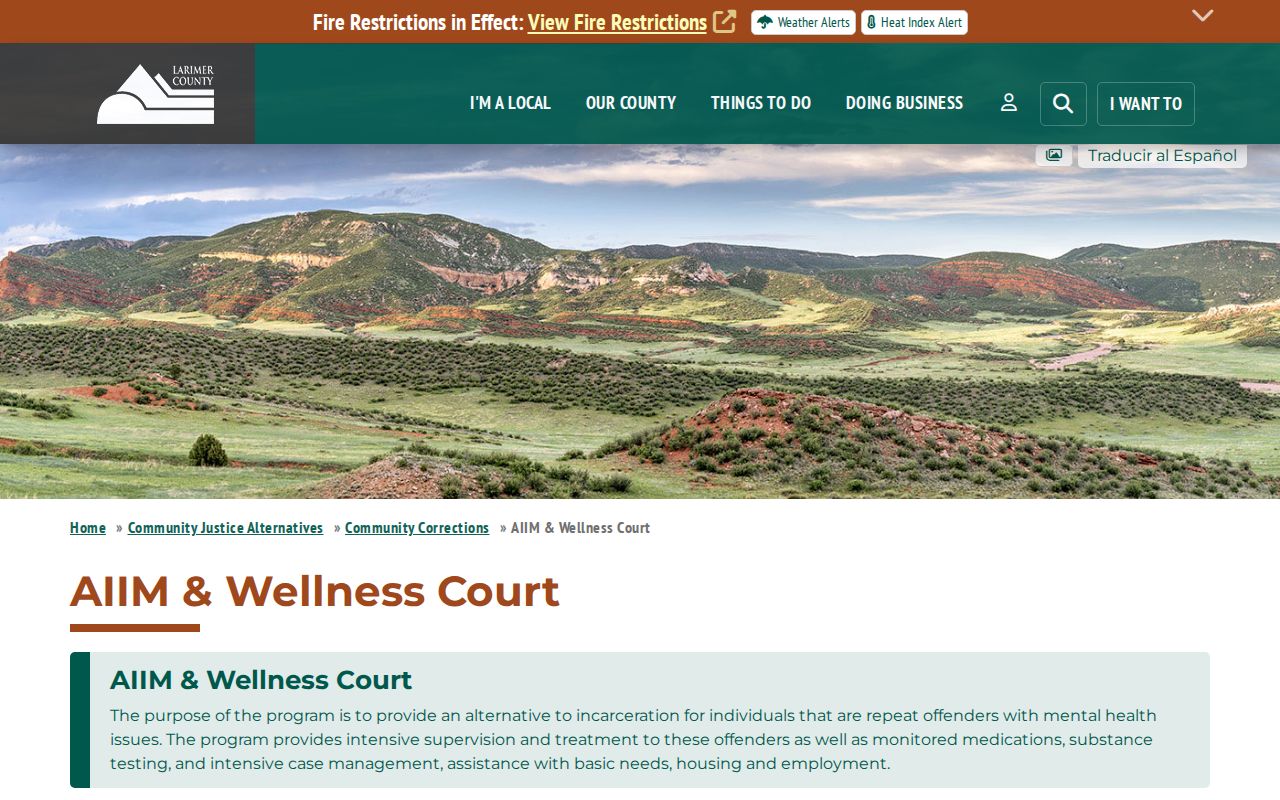
Larimer's mental-health court programs are public at the program level, while individual probate, guardianship, conservatorship, and medical details may be restricted.
Probate Records Are Not Custody Records
Several official custody sources are separate from probate records. The Colorado locate inmate page, Colorado DOC offender search, and Federal Bureau of Prisons inmate locator are used for custody searches, not wills, estates, letters, or guardianship records.
Use the state inmate locator only when the question is custody status, not when requesting a Larimer County probate estate file.
The Colorado DOC offender search source is another custody example that is separate from probate records.
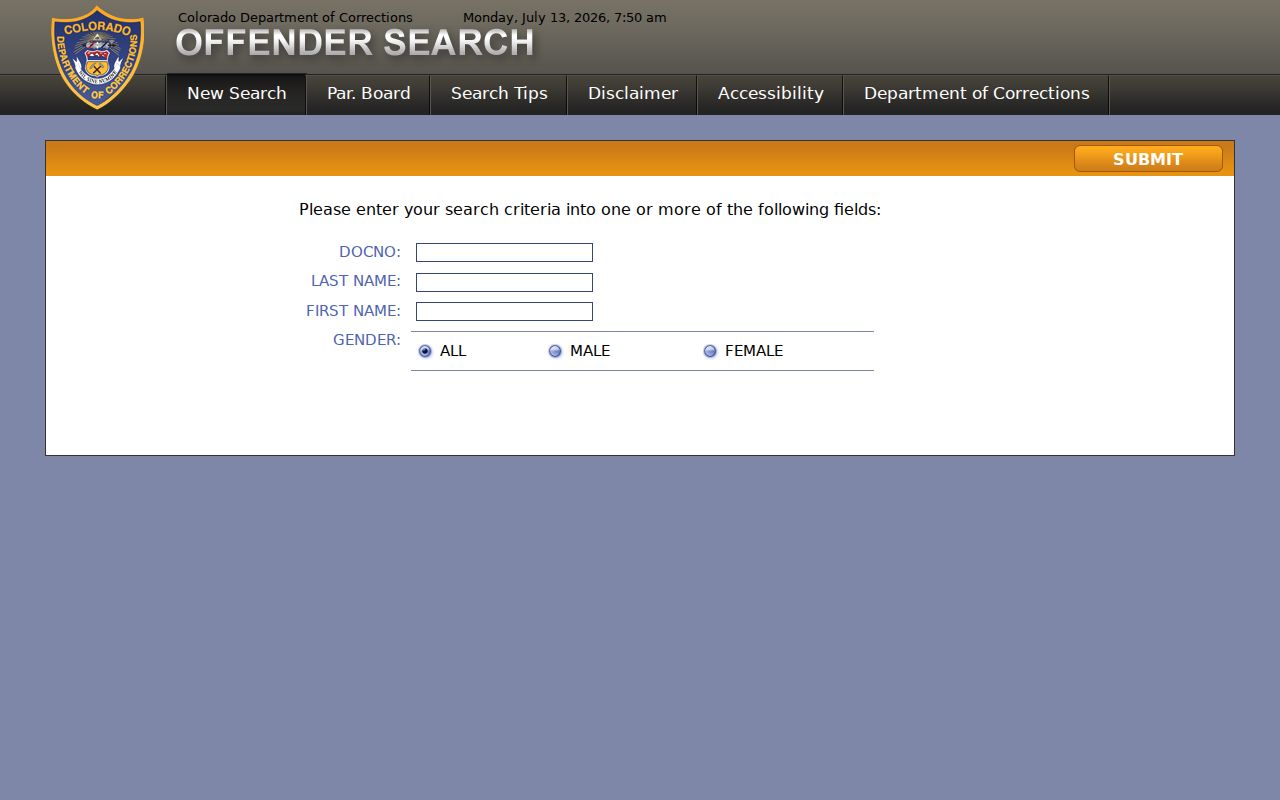
Colorado DOC records concern sentenced state-prison custody and remain outside the Probate Division's estate-record system.
The Federal Bureau of Prisons inmate locator source shows the federal custody path that is also outside probate.
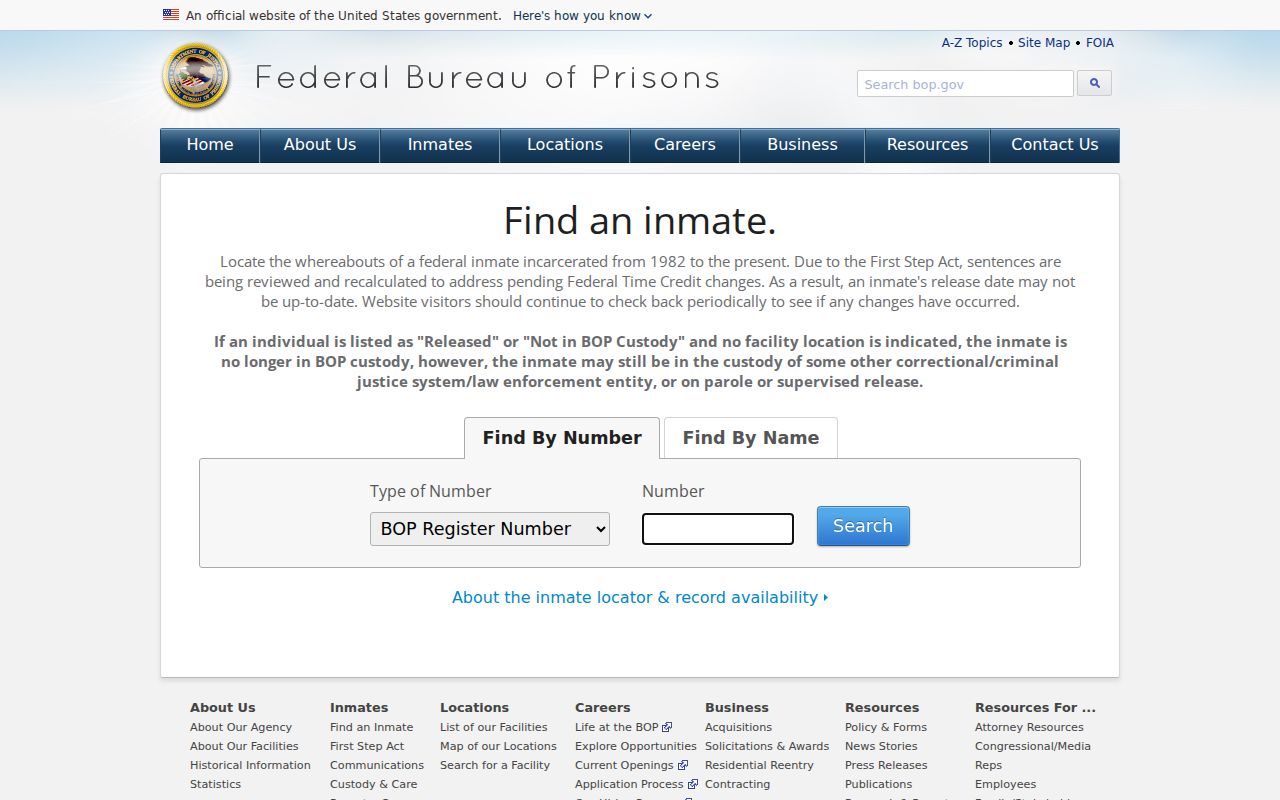
Federal custody records are handled by federal agencies and should not be confused with Larimer County probate case records.