
Larimer County Court Records Search
Official Larimer County court records access starts with the Colorado Judicial Branch docket search when the user needs a court date or daily docket. That search covers Colorado District Court and County Court schedules, including Larimer County cases in the 8th Judicial District. It is not a full document-image system. The docket can point to the court, case number, hearing time, courtroom, and case type, but a copy of a complaint, order, decree, disposition, or certified judgment must come through the Clerk of Court.
For documents, use the Colorado court record/document request form or email the Larimer records desk at 08RecordRequest@judicial.state.co.us. Statewide case data may also be available through Colorado State Courts Data Access and CoCourts, but those are data paths rather than the certified-copy counter. Municipal matters, such as Fort Collins ordinance tickets and local warrants, may sit outside the county and district docket path.
- Identify the court level first. District Court handles felony, domestic, probate, juvenile, mental-health, and larger civil matters, while County Court handles misdemeanors, traffic, infractions, small claims, and civil claims within the county-court cap.
- Search the state docket if the goal is a hearing date. Use the date plus Larimer County, 8th Judicial District, courthouse, case number, party name, or attorney bar number.
- Save the exact case number, court location, party spelling, hearing date, and case type from the docket result before requesting copies.
- Request documents through the Larimer Clerk of Court email or the state record/document form. Name the document, say whether a certified copy is needed, and include contact and delivery details.
- Use the Larimer County Official Records Search only for recorded instruments, liens, deeds, mortgages, and marriage-license recordings, not state court case pleadings.
The Colorado Judicial Branch access guide shown in the official capture is the source for court-record access rules under CJD 05-01 and P.A.I.R.R.
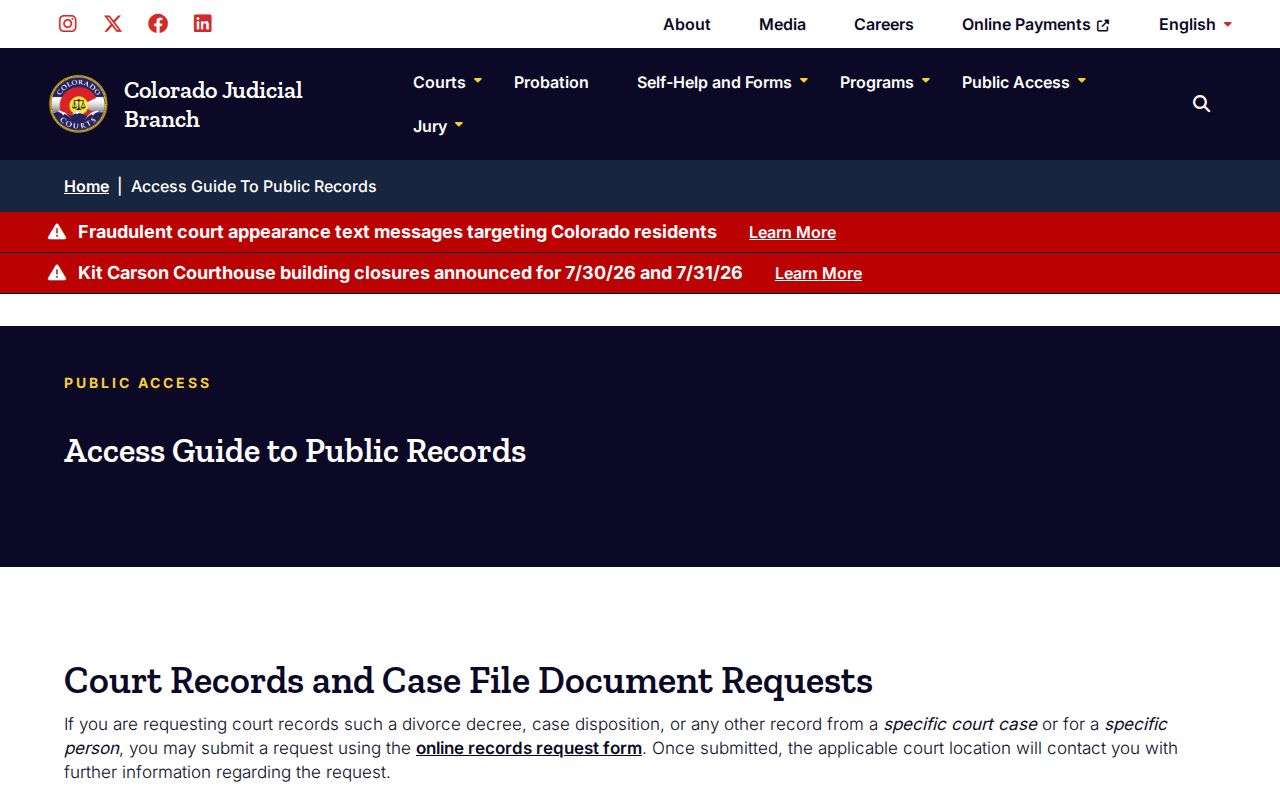
The access guide matters because it explains why a public docket can be open while a document, party name, or full file remains limited by rule or statute.
Larimer County Court Records Fields
The docket search requires a date and at least one more filter. Larimer County users can narrow the search by judicial district, county, courthouse, case number, party name, or attorney information. The more exact the search, the less likely the result will mix Fort Collins, Loveland, Jackson County, or unrelated cases with similar party names.
| Field Label | Type | Required | Notes / Format |
|---|---|---|---|
| Date | Date | Yes | Docket search requires a court date. |
| Judicial District | Dropdown | No | Select 8th Judicial District for Larimer and Jackson counties. |
| County | Dropdown | No | Select Larimer County for state trial-court cases in Fort Collins or Loveland. |
| Courthouse | Dropdown | No | Use Larimer County Justice Center or Loveland County Court when available. |
| Case Number | Text | No | Exact numbers are best for copy requests and docket review. |
| Party / Name | Text | No | Use full names and check spellings, especially in criminal and domestic cases. |
| Attorney / Bar Number | Text | No | Useful for checking a lawyer's daily docket. |
The official Colorado State Courts Data Access capture shows a separate statewide data channel for Colorado case information.
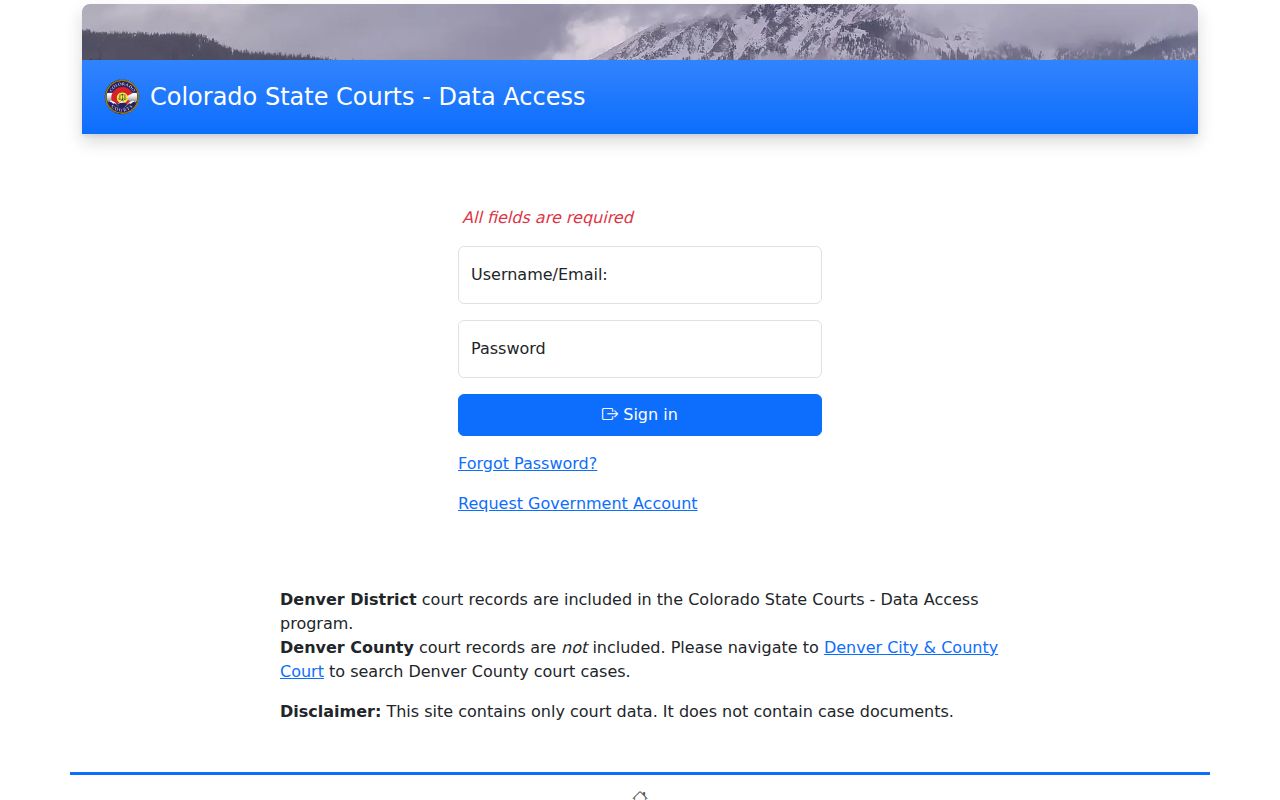
That statewide data access path can support research, but certified Larimer County court records still come from the Clerk of Court.
Larimer County Court Record Types
Larimer County District Court and County Court produce different court records. District Court is the general-jurisdiction court for felony criminal cases, domestic relations, probate, juvenile, mental-health matters, adoption, larger civil cases, and some appeals. County Court handles misdemeanors, traffic, infractions, small claims, and civil claims up to the Colorado county-court limit. Fort Collins Municipal Court is separate and handles city ordinance violations, municipal traffic, photo enforcement, petty offenses, and city warrants.
Some records that people expect to be court records are not court files at all. Deeds, mortgages, liens, recorded judgments, and marriage-license recordings are searched through the Larimer County Clerk and Recorder's official records system. Divorce decrees and probate orders are court records, but marriage licenses are Clerk and Recorder records. Sheriff reports and jail records are criminal justice records, not Clerk of Court case files.
- Civil records can include complaints, answers, motions, orders, judgments, writs, and collection entries.
- Criminal records can include charges, advisements, bond conditions, pleas, motions, disposition, sentencing, probation terms, and restitution.
- Domestic records can include dissolution, custody, child-support, protection-order, and post-decree filings, with limits on private family details.
- Probate records can include estates, wills, guardianships, conservatorships, inventories, letters, and court orders.
- Traffic records can include state traffic tickets in County Court or municipal tickets in city court.
The CoCourts source linked in the manifest describes a real-time Colorado court data service built under a Judicial Branch initiative.
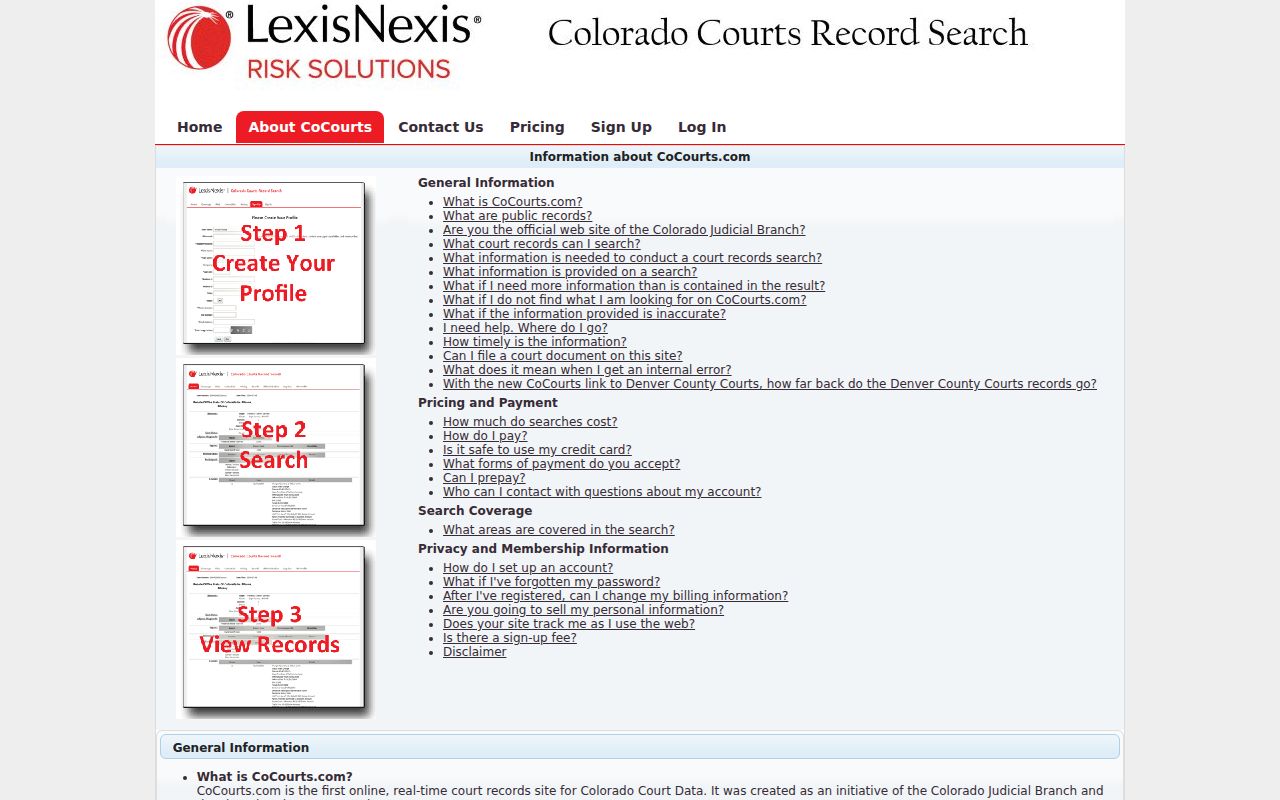
CoCourts can help locate case data, but it does not replace the Larimer Clerk of Court for official copies or certification.
What Larimer County Court Records Show
A Larimer County court record may be only a docket entry, or it may be a file with pleadings, orders, financial entries, and disposition documents. The public result often shows enough to identify the case and hearing, while the full file may require a request. Case-type codes such as CR, M, T, CV, DR, JV, and PR help show whether the matter is criminal, misdemeanor, traffic, civil, domestic, juvenile, or probate.
| Field | What It Shows |
|---|---|
| Case number | Year, case type, and sequence data used to identify the Larimer County court file. |
| Court / courthouse | Larimer County Justice Center, Loveland County Court, or a municipal court when applicable. |
| Case type | Criminal, misdemeanor, traffic, civil, domestic, juvenile, probate, or related category. |
| Parties | Plaintiff, defendant, petitioner, respondent, protected person, estate, or other party names unless restricted. |
| Hearing details | Date, time, courtroom, hearing type, and judicial officer when included in docket output. |
| Docket events | Filings, motions, orders, pleas, settings, continuances, judgments, sentencing, or review entries. |
| Documents | Complaints, informations, warrants, motions, decrees, judgments, mittimus forms, or probate papers when requestable. |
| Disposition and sentence | Outcome, dismissal, judgment, sentence, probation, restitution, fines, and other final terms when public. |
For payment-related case balances, the Colorado Judicial Branch online payment portal is separate from the public case record. Court fines, costs, fees, restitution, and collections may require exact case information before payment can be applied.
Larimer County Public Access Rules
Colorado court records are governed by court access rules, Chief Justice Directive 05-01, and the Public Access to Information and Records Rules. County administrative records fall under Larimer County public records and CORA, while criminal justice records from law enforcement or prosecutors use the Colorado Criminal Justice Records Act process. These channels overlap in daily life, but they are not the same custodian.
The Colorado Revised Statutes source in the manifest is the correct place to read the current text of CORA, CCJRA, sealing, juvenile expungement, probate, and related Colorado statutes.
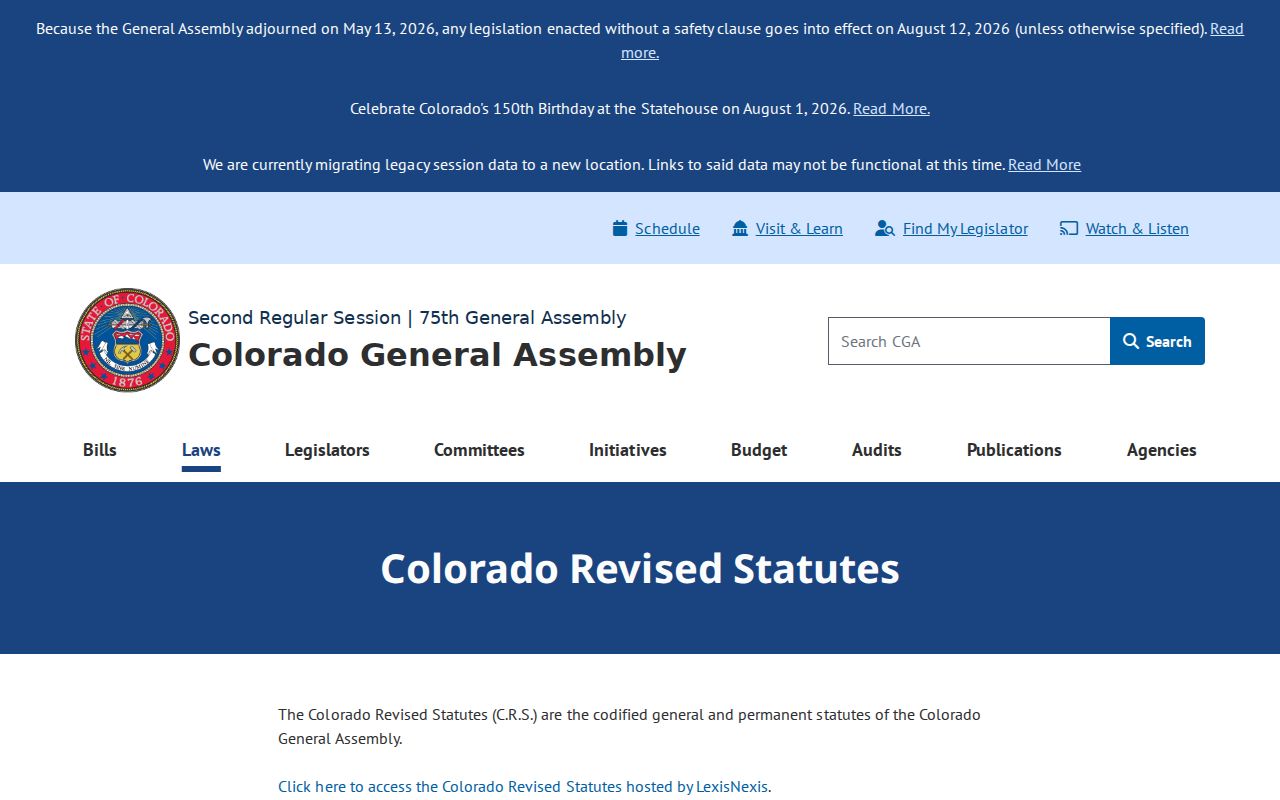
Use the statute source to confirm legal authority, then use the court or county office that actually holds the Larimer County record.
Note: Public access does not mean every document is online, free, unredacted, or available without identity verification.
Restricted Larimer County Court Records
Some Larimer County court records are public only in part. Juvenile delinquency and child-welfare records are commonly restricted. Adoption files are highly restricted. Mental-health, competency, commitment, and treatment records may show limited procedural entries while medical details remain private. Domestic-relations files can contain financial affidavits, child information, protected addresses, and safety-sensitive data that are redacted or withheld.
Sealed criminal records are different from records that were never public. Sealing hides eligible records from ordinary public view, but the record still exists and may remain available to courts, law enforcement, prosecutors, and authorized users. Juvenile expungement can remove or restrict eligible juvenile delinquency records under different rules. A person seeking sealing should use the Colorado Judicial Branch seal-my-case materials and file in the court that handled the case.
The Colorado Judicial Branch directive page in the manifest lists current access-rule materials for court records.
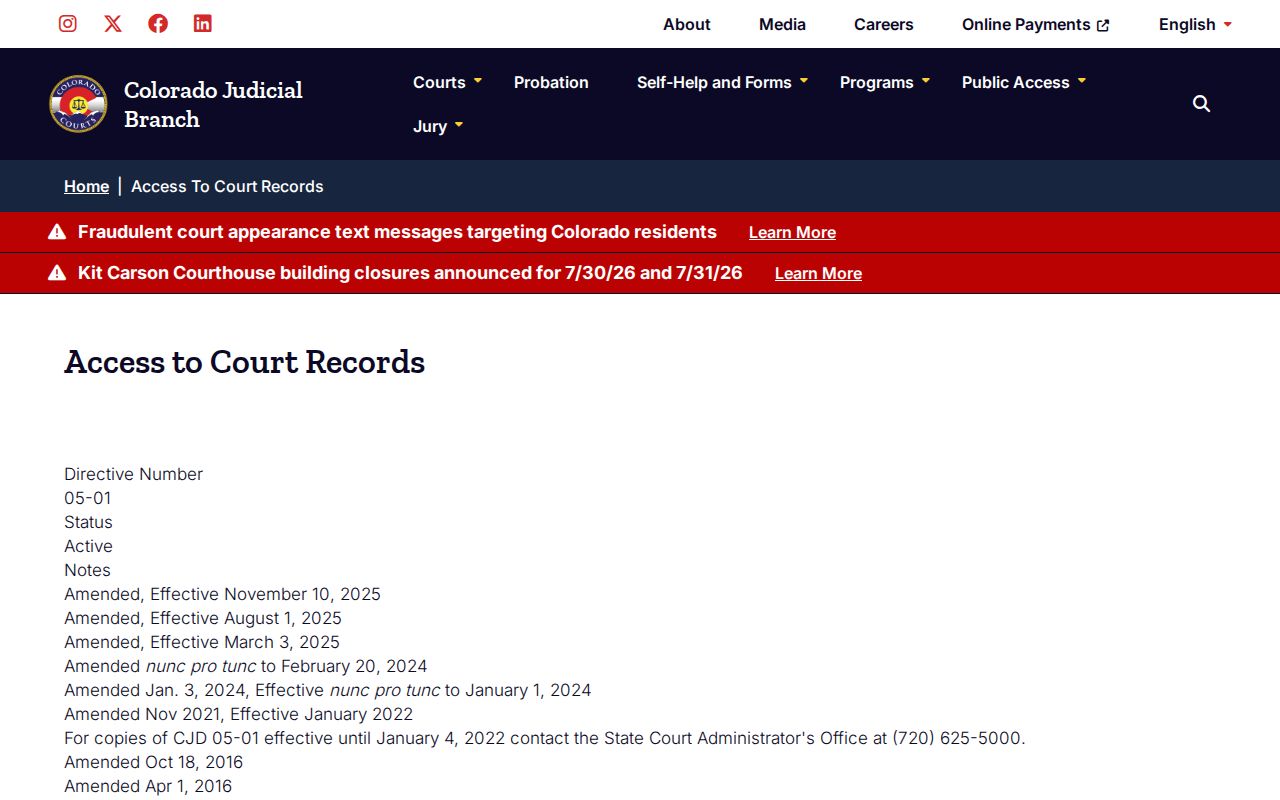
Those directives explain why the Clerk of Court may ask for identification, party status, attorney status, or a court order before releasing a file.
Larimer County Court Record Requests
The main Clerk of Court counter for Larimer County state trial-court files is at the Larimer County Justice Center. The Loveland County Court location also serves Loveland-area county court matters. Before visiting, gather the case number, full party names, date of birth when needed for identification, document names, certification request, and contact information. Court staff can process records requests, but they do not provide legal advice.
Larimer County Clerk of Court
201 LaPorte Avenue, Suite 100
Fort Collins, CO 80521
970-494-3500
Monday-Friday, 7:30 a.m.-4:30 p.m.
Loveland County Court
810 E. 10th Street
Loveland, CO 80537
970-622-2100
Monday-Friday, 8:00 a.m.-noon and 1:00 p.m.-5:00 p.m.
Use Larimer County court dockets for schedules and use the Clerk of Court for file copies. For full criminal case outcomes, the Larimer County criminal court records path is more specific.
For older files, paper-only material, suppressed cases, or requests involving protected personal data, plan on direct clerk follow-up. The state request form asks for requester contact information so court staff can clarify the record, estimate any cost, request identification when required, and choose a delivery method. A clear document title, case number, and party spelling reduce back-and-forth.